A logo is often the first visual impression people have of a brand. A strong logo can communicate personality, professionalism, trust, and the overall character of a business in just a few seconds. But creating a memorable logo traditionally requires design knowledge, specialized software, and sometimes an expensive professional designer.
Today, AI tools for logo design make the process much easier. Entrepreneurs, bloggers, startups, freelancers, creators, and small businesses can generate logo concepts quickly without needing advanced graphic design skills.
These tools can help with everything from choosing colors and fonts to generating layouts, symbols, and complete brand concepts. However, getting a good result still requires thoughtful decisions about branding, readability, originality, and where the logo will be used.
In this guide, you’ll learn how AI-powered logo makers work, what features to look for, how to choose the right tool, common mistakes to avoid, and practical steps for creating a logo that looks professional rather than generic.
What Are AI Tools for Logo Design?
AI tools for logo design are online design platforms that use automated algorithms and intelligent design systems to help users create logos.
Instead of drawing every element manually, users typically provide information such as:
- Business or brand name
- Industry or niche
- Preferred design style
- Colors
- Font preferences
- Symbols or icons
- Brand personality
- Intended audience
The platform then generates multiple logo concepts based on those inputs.
Some tools focus primarily on logo generation, while others combine logo creation with broader branding features such as business cards, social media graphics, color palettes, typography, and brand guidelines.
The biggest advantage is speed. A process that might take hours of manual experimentation can often begin with dozens of concepts in minutes.
Why Use AI Tools for Logo Design?
There are several reasons these tools have become popular among businesses and creators.
1. Faster Logo Creation
Traditional logo development can involve brainstorming, sketching, revisions, typography selection, and color testing.
Automated logo makers can produce several initial concepts quickly, giving you a starting point instead of a blank canvas.
2. No Advanced Design Skills Required
You don’t necessarily need to understand advanced vector editing or graphic design software.
Most platforms use simple interfaces where you enter your preferences and customize the generated result.
3. Affordable for Small Businesses
Hiring a professional designer can be a valuable investment, but it may not fit every startup or personal project’s budget.
Logo-generation platforms can provide a lower-cost way to explore branding ideas.
4. Multiple Design Concepts
One of the most useful features is the ability to compare different styles.
You might discover that a minimalist wordmark works better for your business than the colorful icon you originally imagined.
5. Easy Customization
Many tools allow users to change:
- Fonts
- Colors
- Icons
- Spacing
- Layout
- Backgrounds
- Text positioning
- Symbol size
This makes it possible to turn an automatically generated concept into something more aligned with your brand.
Key Features to Look for in an AI Logo Maker
Not every logo generator offers the same level of control. Before choosing one, consider the following features.
Customization Options
A good platform should allow you to modify the generated design instead of forcing you to accept the first result.
Look for control over typography, colors, icons, alignment, spacing, and layout.
High-Resolution Export
Your logo may appear on a website today and on printed packaging tomorrow.
Look for export options suitable for both digital and print applications.
Transparent Background
A transparent PNG is particularly useful because it allows the logo to be placed on different backgrounds without a visible rectangular box.
Vector Files
For professional branding, vector formats such as SVG can be extremely useful because they can be resized without losing quality.
Brand Kit Features
Some platforms provide a complete brand kit containing:
- Logo variations
- Color palettes
- Font combinations
- Social media assets
- Business card designs
- Brand guidelines
This can save time when establishing a consistent visual identity.
Commercial Usage Rights
Always check the licensing terms before using a generated logo commercially.
Understand whether the design, icon, typography, or other elements can legally be used for your business and whether any restrictions apply.
Popular AI Tools for Logo Design
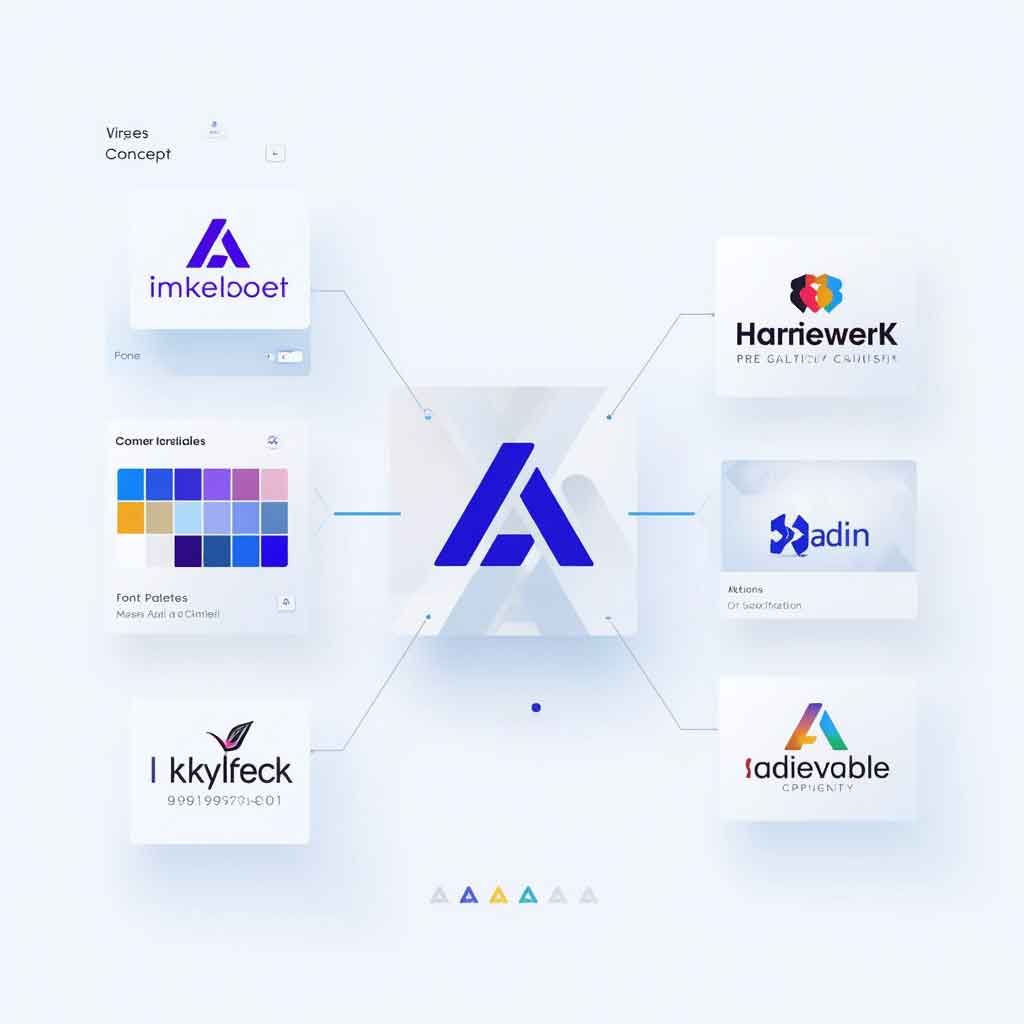
The best tool depends on your needs, budget, customization requirements, and desired branding style.
| Tool Type | Best For | Key Strength |
|---|---|---|
| AI logo generator | Beginners and startups | Fast logo concepts |
| Online design platform | Creators and marketers | Logo plus graphic design |
| Brand identity platform | Businesses | Complete branding system |
| Template-based logo maker | Simple projects | Easy customization |
| Professional design software | Experienced designers | Maximum control |
When comparing specific platforms, don’t choose based solely on the number of templates. Export quality, customization, licensing, originality, and brand consistency are usually more important.
How to Create a Logo Using AI Tools
Creating a logo doesn’t have to be complicated. Follow this process to get better results.
Step 1: Define Your Brand
Before opening a logo generator, identify what your brand represents.
Ask yourself:
- What does the business offer?
- Who is the target audience?
- Is the brand modern, traditional, playful, premium, or professional?
- What emotions should the logo communicate?
- Where will the logo appear?
A clear brand direction makes it easier to evaluate generated designs.
Step 2: Choose a Logo Style
Common logo styles include:
- Wordmarks
- Lettermarks
- Monograms
- Symbols
- Combination marks
- Emblems
- Minimalist logos
For example, a technology startup may benefit from a clean combination mark, while a personal brand may work better with a distinctive wordmark.
Step 3: Select Your Colors Carefully
Color can influence how people perceive a brand.
For example:
- Blue can communicate trust and stability.
- Green is often associated with nature or growth.
- Black can create a premium or sophisticated appearance.
- Orange can feel energetic and approachable.
- Purple can suggest creativity or luxury.
These associations are not universal, so your industry and audience should guide your choices.
Step 4: Generate Multiple Concepts
Don’t immediately choose the first logo you see.
Generate several concepts and compare them.
Look for differences in:
- Typography
- Symbol design
- Proportions
- Color combinations
- Visual balance
- Overall personality
Step 5: Customize the Best Concept
Automatic generation should be treated as a starting point.
Adjust the design until the logo feels appropriate for your brand.
Remove unnecessary details and avoid adding too many decorative elements.
Step 6: Test the Logo at Different Sizes
A logo that looks excellent on a large screen may become unreadable when reduced to a small social media profile image.
Test it as:
- Website header
- Mobile icon
- Social media profile picture
- Business card
- Product label
- Email signature
- Print material
If the design remains recognizable at small sizes, that’s a good sign.
Step 7: Export the Necessary Formats
Ideally, keep several versions of your final logo.
Useful variations include:
- Full-color logo
- Black version
- White version
- Horizontal version
- Square version
- Transparent-background version
Keeping these variations makes future branding work much easier.
AI Logo Design vs. Traditional Logo Design
Automated logo creation and professional logo design each have advantages.
| Factor | AI Logo Tools | Professional Designer |
|---|---|---|
| Speed | Very fast | Usually slower |
| Cost | Often lower | Usually higher |
| Customization | Varies by platform | Highly customizable |
| Design expertise | Built into platform | Human expertise |
| Brand strategy | Limited to moderate | Can be extensive |
| Revisions | Usually self-service | Designer-led |
| Originality | Depends on the system | Can be highly original |
| Best for | Small projects and early-stage brands | Complex or high-value brands |
For a new small business that needs a basic identity quickly, a logo generator can be practical. For a major company where the logo is central to long-term brand strategy, professional design expertise may provide greater value.
Pros and Cons of AI Logo Makers
Pros
- Fast: Generate multiple concepts quickly.
- Accessible: Beginners can create designs without advanced skills.
- Affordable: Useful for startups and small businesses.
- Convenient: Everything can be done online.
- Customizable: Many platforms provide editing tools.
- Good for experimentation: Useful for exploring different visual directions.
Cons
- Generic designs: Some results can look similar to existing logos.
- Limited control: Advanced customization may be restricted.
- Licensing concerns: Usage rights vary between platforms.
- Less strategic thinking: Automated systems may not fully understand your brand story.
- Quality varies: Not every generated concept will look professional.
- Originality requires checking: You should evaluate whether the final design is sufficiently distinctive.
Best Practices for Using AI Tools for Logo Design
Keep the Design Simple
A strong logo doesn’t need dozens of elements.
Simple designs are generally easier to recognize, reproduce, and remember.
Prioritize Readability
If your business name is difficult to read, the logo loses one of its most important functions.
Choose typography that remains clear across different screen sizes.
Avoid Excessive Colors
Using too many colors can make a logo look complicated.
Start with one primary color and one or two supporting colors unless your brand specifically requires a more colorful identity.
Design for Multiple Platforms
Think beyond your website.
Your logo may appear on social media, packaging, advertisements, presentations, mobile devices, and printed materials.
Create a Monochrome Version
A good logo should remain recognizable without relying entirely on color.
A black-and-white version is useful for documents, stamps, merchandise, and situations where color printing isn’t available.
Check Competitors
Research logos used by businesses in your industry.
You don’t want your design to accidentally resemble a competitor.
Competitor research can also help you identify overused symbols and visual trends.
Common Mistakes to Avoid
Choosing the First Generated Logo
The first concept isn’t necessarily the best one.
Generate several options and compare them objectively.
Using Too Many Design Elements
Combining multiple icons, fonts, colors, and effects can quickly make a logo look amateurish.
Following Trends Too Closely
Trendy designs can look attractive today but may become outdated.
Aim for a design that can remain relevant for several years.
Ignoring Scalability
A detailed logo may look beautiful on a desktop but become confusing when displayed as a tiny icon.
Always test different sizes.
Not Checking Licensing
Never assume that every generated asset automatically comes with unrestricted commercial rights.
Read the platform’s current licensing and usage terms before publishing the logo commercially.
Forgetting Brand Consistency
Your logo should work with your website, social media graphics, packaging, typography, and overall visual identity.
A great logo surrounded by inconsistent branding can still create a weak impression.
Expert Tips for Better Logo Results
Start with a clear creative brief. The quality of the information you provide strongly affects the direction of the designs you explore.
Describe personality, not just appearance. Instead of asking for a “nice logo,” define the intended character: modern, trustworthy, elegant, energetic, friendly, or minimalist.
Limit unnecessary detail. A memorable shape is usually more useful than a complicated illustration.
Think in black and white first. If the basic shape doesn’t work without color, adding colors may not solve the underlying design problem.
Consider typography carefully. Fonts communicate personality. A luxury brand, children’s brand, law firm, and technology company shouldn’t necessarily use the same typographic style.
Keep original files. Save editable versions and high-resolution exports so you don’t have to recreate your logo later.
Review trademark considerations. A generated design may not automatically provide exclusive rights. If the logo is important to your business, consider getting appropriate legal advice and conducting relevant trademark checks in your target markets.
People Also Ask
Are AI tools good for logo design?
Yes. They can be useful for generating concepts quickly and affordably, particularly for startups, personal projects, bloggers, and small businesses. However, the final result should still be reviewed for quality, originality, usability, and licensing.
Can I create a professional logo without design experience?
Yes. Modern logo makers are designed to simplify the process. A clear brand concept, restrained color palette, readable typography, and careful customization can produce a professional-looking result.
Are AI-generated logos unique?
Not necessarily. The level of uniqueness depends on the platform and the design elements used. Before adopting a logo, compare it with competitors and consider whether any symbols or layouts are overly common.
Can I use an AI-generated logo commercially?
It depends on the platform’s licensing terms and the specific assets included in the design. Always review the current commercial-use policy before using a logo for a business.
What file format is best for a logo?
For flexible professional use, SVG or another suitable vector format is highly valuable. PNG with a transparent background is also useful for websites and digital applications.
How many colors should a logo have?
There is no universal rule, but many effective logos use a limited color palette. Starting with one primary color and one or two supporting colors can make the design easier to manage consistently.
Should a logo include the business name?
It depends on the brand. A wordmark or combination mark can be useful for new businesses because it helps people associate the name with the visual identity. Established brands may eventually use a symbol independently.
Can a logo made with an online generator be trademarked?
Trademark eligibility depends on factors such as originality, jurisdiction, existing marks, and the rights associated with the elements used. A generated logo should not be assumed to be automatically trademarkable or exclusive.
How to Choose the Right AI Logo Design Tool
Use the following checklist before committing to a platform:
- Check customization options.
- Review available export formats.
- Understand pricing and download restrictions.
- Read commercial-use and licensing terms.
- Check whether transparent and vector files are available.
- Look for brand-kit features if you need broader branding materials.
- Compare the quality of generated concepts.
- Make sure the interface is easy enough for your skill level.
- Review the platform’s privacy and data practices.
- Compare several tools rather than choosing the first one you find.
Internal Linking Opportunities
If you’re building a website around design and business productivity, this article can naturally connect to related content such as:
- AI tools for graphic design
- AI tools for digital marketing
- AI tools for bloggers
- Best branding tools for small businesses
- How to create a brand identity
- Best design tools for social media
- How to choose brand colors
- Logo design principles for beginners
These internal links can help readers discover related resources while strengthening the topical structure of your website.
Authoritative External References
For deeper research, readers can consult established resources covering branding, accessibility, trademarks, and design principles, including:
- W3C Web Accessibility Initiative for accessibility guidance.
- USPTO for information about trademarks in the United States.
- EUIPO for European Union intellectual property and trademark information.
- Professional design organizations and established typography resources for broader design education.
Always verify current legal and licensing requirements for your country before using a logo commercially.