
Creating a professional voiceover traditionally required a microphone, recording equipment, a quiet room, and often a professional voice actor. Today, that process can be much simpler.
An AI voice generator can turn written text into spoken audio using advanced speech synthesis technology. Whether you are creating YouTube videos, online courses, podcasts, advertisements, presentations, audiobooks, or social media content, these tools can help you produce voiceovers without setting up a traditional recording studio.
But choosing and using a voice generator effectively is not simply about finding a tool that can read text aloud. Voice quality, pronunciation, natural expression, language support, customization, licensing, and privacy can all affect the final result.
This guide explains how AI voice generators work, what they can be used for, their advantages and limitations, and how to choose the right solution for your needs.

What Is an AI Voice Generator?
An AI voice generator is software that converts written text into spoken audio using artificial intelligence and speech synthesis technology.
You provide a script, and the system generates an audio recording that sounds like a human speaking. Depending on the platform, you may be able to choose different voices, accents, languages, speaking styles, speeds, and tones.
Modern text-to-speech systems can produce much more than robotic-sounding narration. They may include natural pauses, changes in emphasis, conversational delivery, and different emotional styles.
For example, a creator could enter:
“Welcome to our beginner’s guide to photography.”
The voice generator processes the text and produces spoken audio that can be added to a video, presentation, podcast, or course.
AI Voice Generator vs. Traditional Voice Recording
Traditional recording requires someone to physically speak the script and capture the audio.
An AI-powered system can generate the narration from text.
| Feature | AI Voice Generator | Traditional Recording |
|---|---|---|
| Recording equipment | Usually unnecessary | Required |
| Human speaker | Not always required | Required |
| Production speed | Very fast | Usually slower |
| Voice consistency | Highly consistent | Depends on speaker |
| Editing | Easy to regenerate sections | Requires re-recording |
| Multiple languages | Often available | Requires different speakers |
| Emotional range | Depends on technology | Naturally broad |
| Cost | Often lower for frequent content | Can be higher |
Neither approach is ideal for every situation. A professional human voice actor can still be the better choice when authentic personality, nuanced emotion, or highly distinctive delivery is essential.
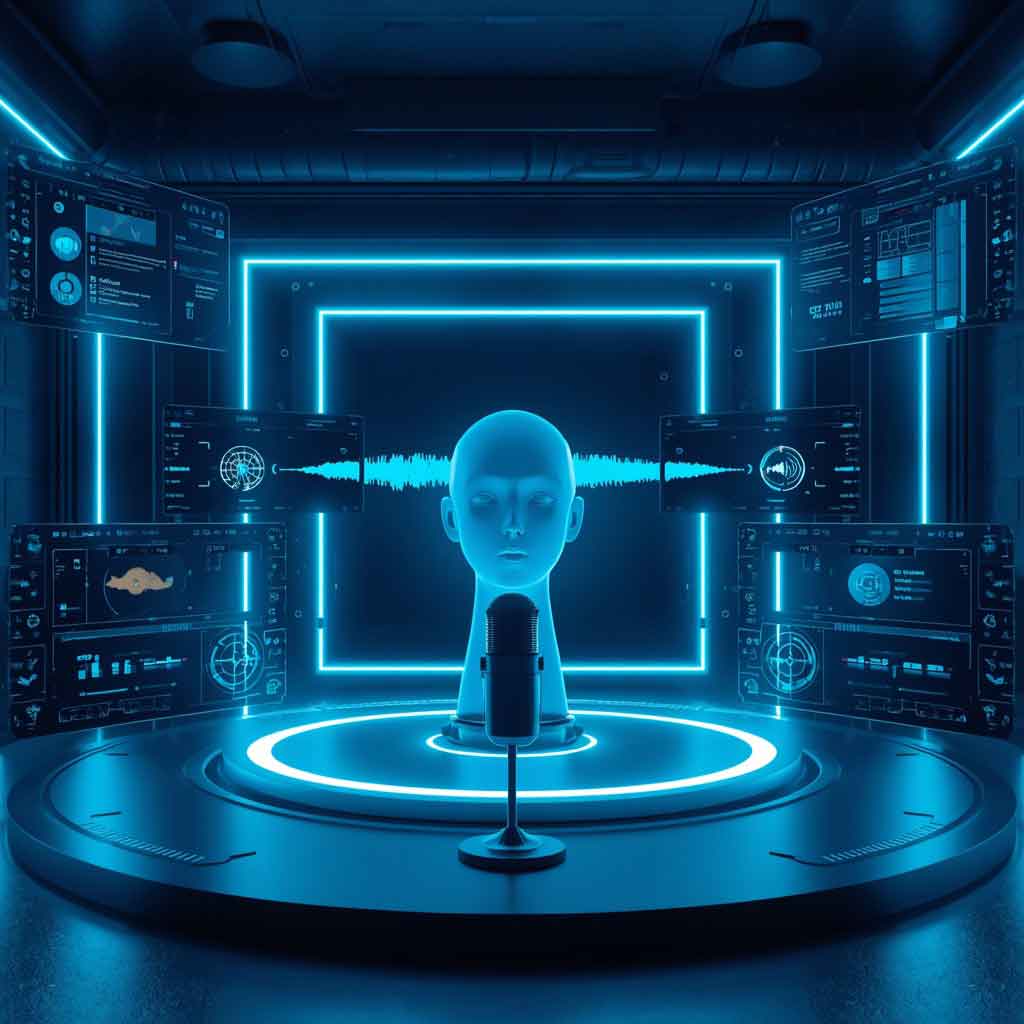
How Does an AI Voice Generator Work?
Most modern voice generation systems follow several basic stages.
1. Text Analysis
The system first analyzes the written script.
It identifies words, punctuation, sentence structure, and other linguistic information that can influence pronunciation and rhythm.
2. Speech Synthesis
The system converts the text into speech characteristics such as:
- Pronunciation
- Rhythm
- Pitch
- Timing
- Pauses
- Intonation
- Emphasis
3. Voice Generation
A synthesized voice then produces the final audio.
More advanced systems attempt to make the result sound conversational rather than simply reading every word at the same speed and pitch.
4. Audio Processing
Some platforms also provide tools for adjusting the generated audio, such as:
- Speed
- Pitch
- Volume
- Pauses
- Pronunciation
- Voice style
- Emotional delivery
The final result can usually be exported as an audio file for use in other applications.
Why Are AI Voice Generators Becoming Popular?
The biggest advantage is efficiency.
A creator can write a script, generate narration, review it, make corrections, and produce another version without arranging another recording session.
This is particularly useful for people who regularly create content.
Major Benefits
Faster Production
Generating a voiceover can take minutes rather than requiring a complete recording session.
Lower Production Costs
For many projects, automated narration can reduce the need for recording equipment, studio time, or repeated voice-actor sessions.
Consistent Voice
If you are producing a series of videos, maintaining the same voice and delivery can make the content feel more consistent.
Multilingual Content
Many voice-generation platforms support multiple languages and accents, making it easier to create localized content.
Easy Corrections
If you discover a mistake in your script, you can edit the text and regenerate the affected section instead of recording the entire narration again.
Common Uses of AI Voice Generators
An AI voice generator can be useful across many industries and content formats.
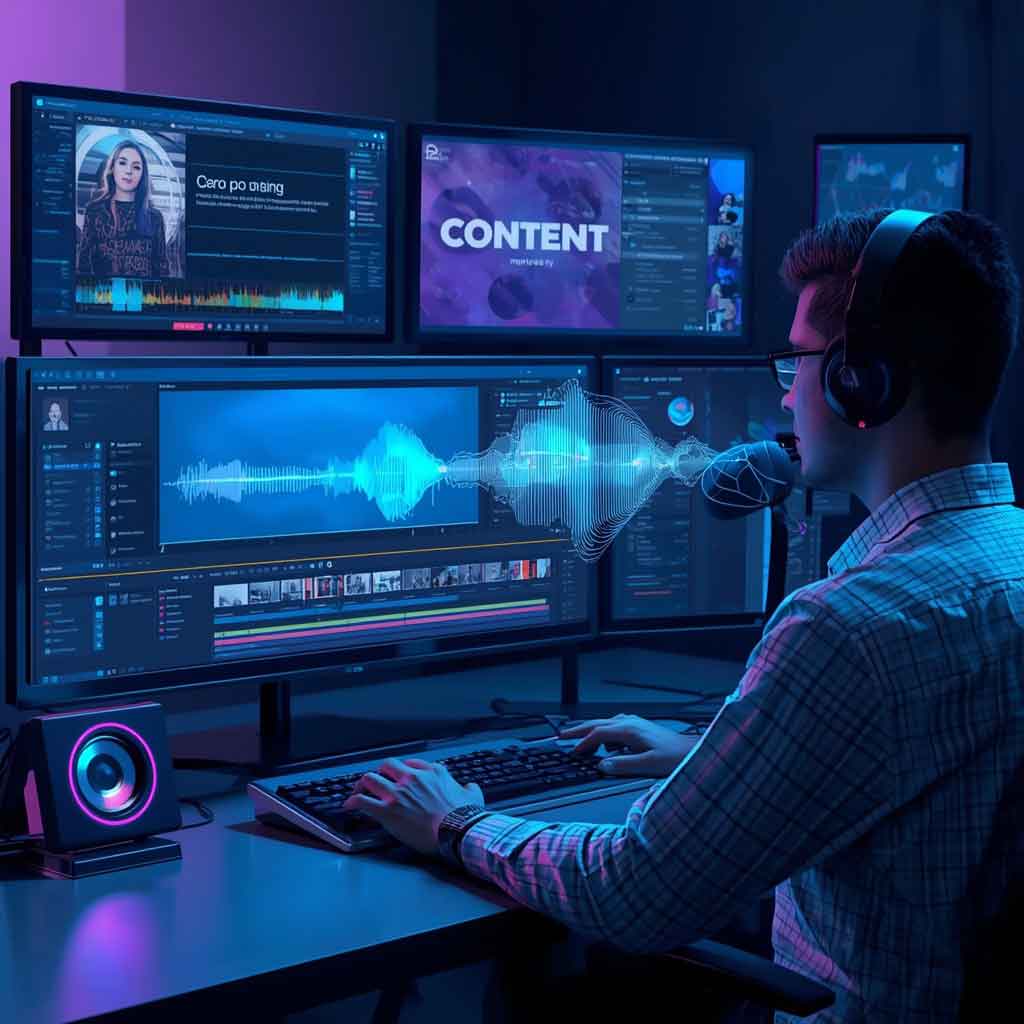
YouTube Videos
Video creators can use generated narration for:
- Tutorials
- Explainer videos
- Educational content
- Product demonstrations
- Documentary-style videos
- List videos
However, narration should support the video’s original value rather than simply reading generic information.
E-Learning and Online Courses
Teachers and course creators can use voice generation to turn written lessons into audio-based learning materials.
For example, a course might include:
- Written lesson
- AI-generated narration
- Supporting visuals
- Quiz or exercise
This can make educational content more accessible to different types of learners.
Podcasts
Voice synthesis can help with certain podcast formats, especially scripted educational or informational programs.
However, listeners often value authentic personality and spontaneous conversation, so human hosts may still be preferable for interview-based or personality-driven podcasts.
Social Media Content
Short-form creators can use generated narration for:
- Reels
- Shorts
- TikTok-style videos
- Educational clips
- Product videos
- Storytelling content
Marketing and Advertising
Businesses can create voiceovers for:
- Promotional videos
- Product demonstrations
- Social advertisements
- Presentations
- Internal training
- Customer education
Commercial use requires particular attention to the platform’s licensing terms.
Audiobooks
Voice generation can be useful for some audiobook projects, especially when a publisher or creator wants to produce large amounts of narrated content efficiently.
For premium storytelling, however, voice quality and expressive performance become especially important.
What Features Should You Look For?
Not every voice-generation platform provides the same capabilities.
Natural-Sounding Voices
This should be one of your first considerations.
Listen to sample outputs and pay attention to whether the voice sounds natural during:
- Long sentences
- Questions
- Numbers
- Abbreviations
- Unusual names
- Emotional statements
Language and Accent Support
If you publish internationally, check whether the platform supports your required languages and regional accents.
Voice Selection
A useful platform may provide voices suited to different purposes, such as:
- Professional narration
- Casual conversation
- Educational content
- Advertising
- Storytelling
Pronunciation Controls
This is particularly important for technical, medical, scientific, or brand-related content.
A good system should give you some way to correct difficult pronunciations.
Speed and Pausing
Being able to control speaking speed and pauses can make a major difference to the quality of narration.
Commercial Licensing
Always check whether generated audio can legally be used for commercial purposes.
A free plan may have different licensing conditions from a paid or business plan.
How to Choose the Best AI Voice Generator
Instead of choosing a tool simply because it has the largest voice library, evaluate it according to your actual requirements.
Step 1: Define Your Project
Ask yourself:
- What type of content am I creating?
- Who will listen to it?
- Do I need one language or several?
- Is the content commercial?
- How much audio will I generate each month?
Step 2: Test Several Voices
Generate the same short script using several available voices.
Compare:
- Naturalness
- Pronunciation
- Pacing
- Tone
- Clarity
- Consistency
Step 3: Test Difficult Text
Do not test only simple sentences.
Try:
- Names
- Numbers
- Acronyms
- Technical terms
- Questions
- Long paragraphs
This reveals weaknesses that may not appear in promotional samples.
Step 4: Check Licensing
Before publishing generated audio commercially, read the platform’s current terms carefully.
Pay attention to:
- Commercial rights
- Attribution requirements
- Voice ownership
- Redistribution restrictions
- Content restrictions
Step 5: Consider Workflow
A technically impressive tool can still be inconvenient if it does not fit your workflow.
Check whether it supports the audio format, editing process, and applications you already use.
AI Voice Generator Pros and Cons
Pros
- Fast voiceover production
- Easy script revisions
- Consistent narration
- Multiple languages and accents
- Useful for large amounts of content
- Can reduce recording requirements
- Accessible to creators without recording equipment
Cons
- Some voices may still sound artificial
- Emotional expression varies by system
- Pronunciation can sometimes be incorrect
- Licensing rules differ between services
- Voice cloning raises ethical and privacy concerns
- Poorly written scripts can produce poor narration
AI Voice Generation vs. Human Voice Actors
The choice depends heavily on the project.
Choose generated narration when speed, consistency, scalability, or multilingual production are priorities.
Choose a human voice actor when emotional nuance, personal connection, character performance, or distinctive brand identity matters most.
For example, a software tutorial may work very well with a synthetic narrator. A dramatic audiobook or emotionally sensitive commercial may benefit considerably from a professional human performer.
Best Practices for Better Voiceovers
The quality of the final audio depends partly on the script.
Write for Speaking, Not Reading
Written language can be more complicated than spoken language.
Instead of long, complicated sentences, use clear sentences with natural pauses.
Use Punctuation Strategically
Commas, periods, question marks, and paragraph breaks can influence delivery.
Keep Sentences Reasonably Short
Shorter sentences are generally easier for a voice system to deliver naturally.
Test Pronunciation
Listen carefully to names, brands, abbreviations, and technical vocabulary.
Review Before Publishing
Never assume generated audio is perfect.
Listen to the complete recording before publishing it.
Check for:
- Mispronounced words
- Strange pauses
- Incorrect emphasis
- Repeated sounds
- Awkward sentence delivery
Common Mistakes to Avoid
Choosing a Voice Based Only on the Demo
A polished demo does not guarantee that the voice will perform equally well with your script.
Better approach: Test your own content before deciding.
Ignoring Licensing
A voice may be available for generation but still have restrictions on commercial use.
Better approach: Review the current license and usage terms.
Using Extremely Long Sentences
Long sentences can cause unnatural pacing.
Better approach: Break complicated ideas into shorter spoken phrases.
Publishing Without Listening
Even high-quality speech synthesis can occasionally produce unexpected pronunciations.
Better approach: Proof-listen to every final recording.
Overusing Artificial Voices
If every piece of content sounds identical, your audience may become less engaged.
Better approach: Combine strong scripts, appropriate visuals, sound design, and narration.
Expert Tips for More Natural AI Voiceovers
1. Write conversationally.
Imagine you are speaking directly to one person.
2. Add intentional pauses.
A short pause can make important information easier to understand.
3. Match the voice to the audience.
A professional training course may require a different voice from an entertainment channel.
4. Avoid unnecessary filler.
Good narration starts with a strong script.
5. Create a consistent voice style.
For a series, use similar pacing, tone, and pronunciation choices.
6. Always review the final output.
Automated generation does not eliminate the need for human quality control.
Frequently Asked Questions
What is an AI voice generator?
An AI voice generator is a software tool that converts written text into spoken audio using speech synthesis technology.
Can an AI voice generator sound like a real person?
Yes. Modern systems can produce highly natural speech, although quality varies between platforms, voices, languages, and scripts.
Can I use generated voices for YouTube videos?
In many cases, yes, but you should check the specific platform’s licensing terms and YouTube’s applicable content policies. The quality and originality of the overall content also matter.
Are AI-generated voices free?
Some platforms offer free plans or limited free usage. Others charge based on characters, minutes, features, or subscription levels.
Can AI voice generators speak different languages?
Many support multiple languages and regional accents, but language quality varies. Test your target language before committing to a platform.
Can I create a voice from a real person’s voice?
Some services provide voice-cloning technology. However, you should only clone a person’s voice with appropriate permission and follow applicable laws and platform policies.
Are AI-generated voices good for audiobooks?
They can be useful for certain audiobook projects, particularly when scalability is important. For highly emotional storytelling, a skilled human narrator may still provide a stronger performance.
How can I make generated narration sound more natural?
Start with a conversational script, use appropriate punctuation, control pacing, test pronunciation, and listen carefully to the final audio before publishing.

Pingback: AI Tools for Business: 15 Best AI Solutions to Boost Productivity and Growth in 2026