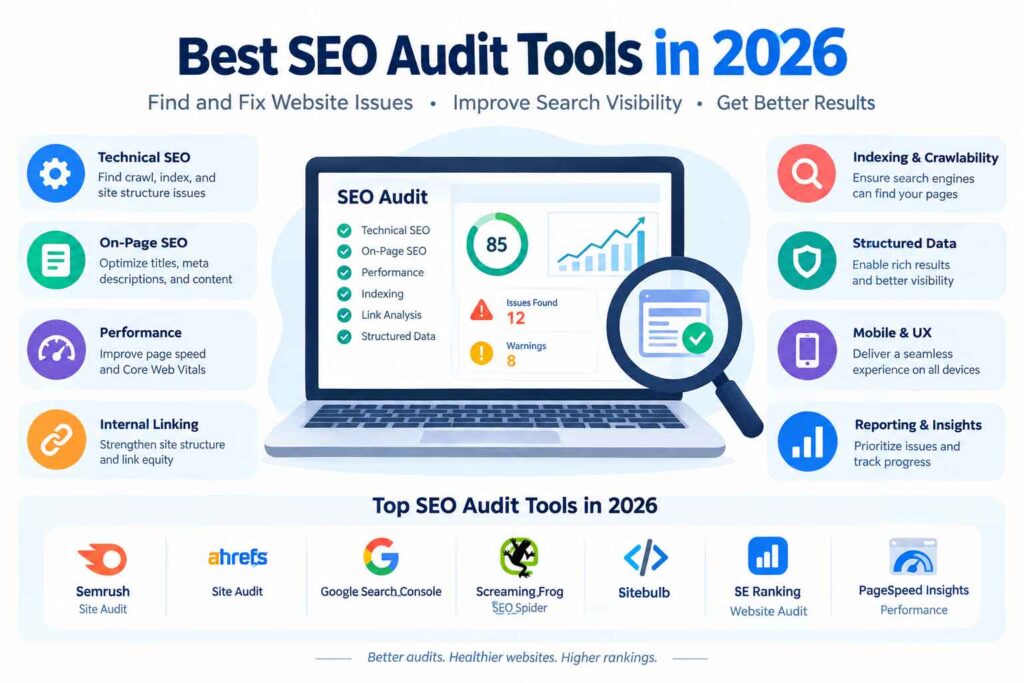
Creating good content is no longer enough to compete in organic search. A page can be well-written and still struggle to rank if it does not match search intent, cover the topic thoroughly, target relevant keywords, or provide a better experience than competing pages.
That is where SEO content optimization tools can help.
These tools analyze content, keywords, search results, readability, topical coverage, internal links, and other on-page SEO factors. Some focus heavily on semantic optimization, while others combine content editing with keyword research, competitor analysis, technical SEO, or AI-powered workflows.
But there is an important distinction: a content score is not a ranking guarantee. The best optimization process combines tool-based analysis with human judgment, original insights, useful examples, accurate information, and a clear understanding of what searchers actually need.
In this guide, we’ll examine the 15 best SEO content optimization tools in 2026, what each tool does, who it is best suited for, key advantages and limitations, and how to choose the right solution for your workflow.
What Are SEO Content Optimization Tools?
SEO content optimization tools are software platforms that help you improve web content for both users and search engines.
Depending on the platform, they may help with:
- Keyword optimization
- Search intent analysis
- Semantic SEO
- Content readability
- Competitor content analysis
- SERP analysis
- Related keyword discovery
- Content gap analysis
- Topic coverage
- Heading optimization
- Internal linking
- Meta title and description optimization
- Content freshness
- On-page SEO
- Content briefs
For example, imagine you are writing an article about email marketing software. A content optimization platform may analyze pages ranking for related searches and identify topics, entities, questions, and related terms that frequently appear in relevant results.
You can then use that information to decide what your article should cover.
The goal isn’t to copy competitors or insert every suggested keyword. The goal is to create a more useful, complete, and relevant resource.

Quick Comparison: Best SEO Content Optimization Tools
| Tool | Best For | Key Strength | Free Option |
|---|---|---|---|
| Surfer | Content optimization | SERP-based content analysis | Limited |
| Clearscope | Editorial teams | Content quality and topic coverage | Limited |
| Frase | Content research | Research + optimization | Limited |
| Semrush | Complete SEO workflows | SEO ecosystem | Limited |
| Ahrefs | SEO professionals | Content + backlink research | Limited |
| MarketMuse | Enterprise content teams | Topic modeling and planning | Limited |
| Scalenut | AI-assisted workflows | Content planning and optimization | Limited |
| Dashword | Content optimization | Simple content briefs | Limited |
| NeuronWriter | Semantic optimization | NLP-driven recommendations | Limited |
| Page Optimizer Pro | On-page SEO | Detailed page-level analysis | No permanent free plan |
| SE Ranking | Small businesses | All-in-one SEO tools | Trial |
| WriterZen | Keyword and topic research | Topic discovery | Limited |
| Rank Math | WordPress users | On-page SEO inside WordPress | Yes |
| Yoast SEO | WordPress content | SEO and readability guidance | Yes |
| Google Search Console | Performance analysis | First-party search data | Yes |
Features and pricing can change, so check each platform’s current plans before purchasing.
15 Best SEO Content Optimization Tools in 2026
1. Surfer
Best for: Data-driven content optimization
Surfer is one of the most recognizable platforms in the content optimization space. Its core workflow focuses on analyzing search results and providing recommendations for improving content based on competing pages.
You can use it to build content briefs, identify relevant terms, analyze content structure, and optimize existing articles.
Key features
- Content Editor
- SERP analysis
- Keyword and topic recommendations
- Content scoring
- Content planning
- AI-assisted content workflows
- Competitor analysis
Pros
- Strong content optimization workflow
- Useful SERP-based recommendations
- Helpful for writers and SEO teams
- Supports content planning
Cons
- Advanced features can be expensive
- Recommendations still require editorial judgment
Best for: SEO teams and content marketers who want a data-driven optimization process.
2. Clearscope
Best for: Professional editorial teams
Clearscope focuses heavily on helping teams create comprehensive, high-quality content around a target topic.
Rather than simply checking whether a keyword appears on a page, the platform helps writers understand related concepts and terms associated with the subject.
Key features
- Content reports
- Keyword and topic recommendations
- Content grading
- Readability analysis
- Content briefs
- Google Docs integration
Pros
- Clean interface
- Strong editorial workflow
- Easy for writers to understand
- Useful for maintaining content standards
Cons
- Pricing can be relatively high
- Better suited to professional teams than casual bloggers
Best for: Publishers, agencies, and editorial teams that need consistent content optimization.
3. Frase
Best for: Content research and optimization
Frase combines content research, SERP analysis, content briefs, and optimization in one workflow.
It can help you understand what competing pages discuss before you start writing. This is particularly useful when you want to identify important subtopics and questions surrounding a primary keyword.
Useful capabilities
- SERP research
- Content briefs
- Topic research
- Content optimization
- Question research
- AI-assisted content workflows
Pros
- Good research workflow
- Useful for creating content briefs
- Combines research and optimization
Cons
- Some advanced functionality requires paid plans
- AI-generated suggestions still need human review
Best for: Bloggers, content marketers, and SEO professionals who want research and optimization together.
4. Semrush
Best for: All-in-one SEO workflows
Semrush is much broader than a content optimization tool. It provides keyword research, competitor analysis, backlink research, technical SEO, rank tracking, and content-related tools.
Its content workflow can help you move from keyword discovery to content creation and optimization without constantly switching platforms.
Key features
- Keyword research
- SEO Content Template
- SEO Writing Assistant
- Topic research
- Competitor analysis
- Position tracking
- Site auditing
Pros
- Extremely broad SEO toolkit
- Strong keyword and competitor research
- Useful for agencies and businesses
- Connects content work with wider SEO activities
Cons
- Large feature set can feel overwhelming
- Full access can be expensive
Best for: Businesses and SEO professionals who need content optimization alongside broader SEO capabilities.
5. Ahrefs
Best for: SEO professionals and content strategists
Ahrefs is widely used for keyword research, backlink analysis, competitor research, site auditing, and content strategy.
Its content-related capabilities can help you discover search opportunities, analyze competitors, identify keyword ideas, and understand which topics are attracting organic traffic.
Key features
- Keyword research
- Content research
- Competitor analysis
- Site audit
- Rank tracking
- Backlink analysis
- SERP analysis
Pros
- Strong SEO data
- Excellent competitor research
- Powerful keyword analysis
- Useful for content strategy
Cons
- Advanced features require paid access
- Can be more than a beginner needs
Best for: Experienced SEO professionals who want content optimization connected to keyword, competitor, and backlink research.
6. MarketMuse
Best for: Enterprise content strategy
MarketMuse takes a broader approach to content optimization by focusing on topics, topical authority, content gaps, and content planning.
Instead of optimizing one article in isolation, it can help teams evaluate their wider content coverage.
Key features
- Topic modeling
- Content gap analysis
- Content planning
- Competitive analysis
- Topic authority analysis
- Content optimization
Pros
- Strong strategic focus
- Useful for large content libraries
- Helpful for identifying content gaps
Cons
- More complex than basic optimization tools
- Better suited to established content operations
Best for: Enterprise publishers and large SEO teams managing extensive content portfolios.
7. Scalenut
Best for: AI-assisted SEO content workflows
Scalenut combines keyword research, content planning, writing assistance, and optimization.
Its workflow is designed to help users move from a target keyword to research, outline creation, writing, and optimization.
Key features
- Keyword research
- Content briefs
- SERP analysis
- Content optimization
- AI writing assistance
- Content planning
Pros
- Broad content workflow
- Useful for content teams
- Combines planning and optimization
Cons
- AI-focused features aren’t necessary for every workflow
- Users should fact-check generated material
Best for: Marketers who want content planning and optimization in one platform.
8. Dashword
Best for: Simple content optimization and briefs
Dashword focuses on making content research and optimization relatively straightforward.
It can analyze search results and help identify terms and topics worth considering in your article.
Key features
- Content briefs
- SERP analysis
- Content optimization
- Keyword recommendations
- Content monitoring
Pros
- Simple workflow
- Useful for content teams
- Good for creating structured briefs
Cons
- Smaller ecosystem than major all-in-one SEO platforms
- Advanced SEO users may want additional tools
Best for: Small content teams and marketers who prefer a focused optimization platform.
9. NeuronWriter
Best for: Semantic SEO optimization
NeuronWriter focuses on semantic content optimization and competitor analysis.
The platform can provide recommendations around related terms, content structure, and topical coverage.
Key features
- NLP-based recommendations
- SERP analysis
- Content scoring
- Competitor analysis
- Content briefs
- Internal linking suggestions
Pros
- Strong semantic SEO focus
- Useful recommendations for topical coverage
- Can be cost-effective for some users
Cons
- Interface may take some time to learn
- Recommendations should not replace editorial judgment
Best for: Bloggers and SEO specialists who want detailed semantic optimization.
10. Page Optimizer Pro
Best for: Detailed on-page SEO analysis
Page Optimizer Pro takes a more page-focused approach to SEO. It analyzes on-page elements and provides recommendations based on competitive search results.
It can be useful when you want to investigate specific ranking factors rather than simply generate a broad content score.
Key areas
- On-page analysis
- Keyword placement
- Heading analysis
- Content analysis
- Competitor comparison
- Page-level recommendations
Pros
- Detailed page analysis
- Useful for advanced SEO testing
- Focuses specifically on on-page optimization
Cons
- More technical than beginner-friendly platforms
- Not designed to replace a complete SEO suite
Best for: Advanced SEOs who want granular on-page analysis.
11. SE Ranking
Best for: Small businesses and growing SEO teams
SE Ranking provides a broad collection of SEO tools, including rank tracking, keyword research, competitor analysis, website auditing, and content-related functionality.
This makes it useful when content optimization is only one part of your SEO workflow.
Key features
- Rank tracking
- Keyword research
- Competitor research
- Website audit
- Content optimization
- Backlink monitoring
Pros
- Broad SEO toolkit
- Suitable for agencies and businesses
- Combines content with technical and ranking data
Cons
- Content optimization isn’t its only focus
- Some features require higher-tier plans
Best for: Businesses looking for a balanced SEO platform.
12. WriterZen
Best for: Topic and keyword research
WriterZen combines keyword discovery, topic clustering, content research, and content creation workflows.
Its topic-focused approach can help marketers move beyond a single keyword and build content around related search themes.
Useful features
- Keyword research
- Topic discovery
- Keyword clustering
- Content briefs
- Content optimization
Pros
- Useful for topic research
- Helps organize keyword groups
- Practical for content planning
Cons
- Less comprehensive than full SEO suites
- Best results require strategic keyword selection
Best for: Content marketers building topic clusters and editorial plans.
13. Rank Math
Best for: WordPress users
Rank Math brings on-page SEO recommendations directly into WordPress.
Instead of moving between a content editor and an external SEO platform, you can optimize important page elements while working inside WordPress.
Key features
- Focus keyword analysis
- SEO title optimization
- Meta descriptions
- Schema markup
- Internal linking assistance
- Sitemap functionality
- On-page SEO analysis
Pros
- Convenient WordPress integration
- Strong free feature set
- Beginner-friendly
- Useful technical SEO features
Cons
- Recommendations can be overly simplified for advanced users
- Not a substitute for comprehensive competitor research
Best for: WordPress publishers who want on-page SEO guidance directly inside their CMS.
14. Yoast SEO
Best for: WordPress SEO and readability
Yoast SEO is another popular WordPress SEO plugin. It provides on-page recommendations while you create or edit content.
Its readability checks can be particularly useful for improving structure and making content easier to scan.
Key features
- SEO analysis
- Readability analysis
- SEO titles
- Meta descriptions
- XML sitemaps
- Schema-related features
- Internal linking tools in certain plans
Pros
- Easy to use
- Strong WordPress integration
- Helpful readability guidance
- Long-standing SEO ecosystem
Cons
- Some advanced features require paid plans
- A plugin cannot replace comprehensive SEO research
Best for: Bloggers, publishers, and WordPress site owners.
15. Google Search Console
Best for: First-party performance data
Google Search Console is different from most tools on this list because it does not primarily function as a content optimization editor.
Instead, it provides valuable information about how your site performs in Google Search.
You can use that data to identify pages that already receive impressions but could potentially improve their search performance through better titles, content alignment, or topical coverage.
Key features
- Search queries
- Impressions
- Clicks
- Average position
- Indexing reports
- Search performance
- Page-level data
Pros
- Free
- Uses Google’s own search performance data
- Excellent for identifying optimization opportunities
- Essential for website owners
Cons
- Doesn’t provide the same content recommendations as dedicated optimization platforms
- Requires interpretation
Best for: Every website owner, SEO professional, and content marketer.
How to Choose the Right SEO Content Optimization Tool
There isn’t one tool that fits every content workflow.
Consider these factors before subscribing.
1. Your Primary Goal
First determine what you actually need.
If your priority is:
- Content optimization: Consider dedicated platforms such as Surfer or Clearscope.
- Keyword research: Ahrefs or Semrush may be more appropriate.
- Content research: Frase can be useful.
- Semantic optimization: NeuronWriter may fit your workflow.
- WordPress optimization: Rank Math or Yoast SEO can be convenient.
- Performance analysis: Google Search Console is essential.
2. Your Content Volume
A solo blogger publishing several articles a month has different requirements from an agency producing hundreds of pages.
Before purchasing, consider:
- Number of articles per month
- Number of users
- Number of websites
- Content refresh requirements
- Collaboration needs
- Reporting requirements
3. Your Existing SEO Stack
Avoid paying for overlapping features.
For example, if your current SEO platform already provides excellent keyword research, you may only need a specialized content optimization tool.
4. Data Quality
Look at how the platform generates its recommendations.
A useful tool should help you understand why a recommendation exists rather than simply giving you a score.
5. Editorial Control
Good SEO content should still sound natural.
Choose tools that provide useful guidance without encouraging you to force keywords into every paragraph.
How to Optimize Content Using SEO Tools

A strong workflow can be surprisingly simple.
Step 1: Identify the search intent
Before opening an optimization editor, determine what users actually want.
For example, the intent behind “best project management software” differs from “how to use project management software.”
The content format, depth, and conversion goals should reflect that difference.
Step 2: Research the SERP
Analyze relevant search results to understand:
- Common content formats
- Frequently covered topics
- Searcher questions
- Competing page types
- Potential content gaps
Step 3: Build a useful outline
Organize your article around the reader’s questions rather than a list of keywords.
Use logical H2 and H3 headings.
Step 4: Write naturally
Create the best answer you can before worrying about the optimization score.
Include:
- Original explanations
- Examples
- Data where appropriate
- Practical steps
- Relevant expert insights
- Clear definitions
Step 5: Run a content optimization analysis
Now use your chosen platform to identify potential gaps.
Check:
- Topic coverage
- Related terms
- Content structure
- Readability
- Keyword usage
- Competitor gaps
Step 6: Apply recommendations selectively
Don’t blindly follow every recommendation.
If a tool suggests adding a term that makes a sentence awkward, don’t add it just to increase your score.
Step 7: Improve the final user experience
Before publishing, check:
- Is the introduction useful?
- Are headings descriptive?
- Are paragraphs easy to scan?
- Are examples relevant?
- Are claims accurate?
- Are internal links useful?
- Does the article answer the main question?
Best Practices for SEO Content Optimization
Focus on Search Intent
A page can contain hundreds of relevant keywords and still fail to satisfy search intent.
Understand whether users want:
- Information
- Instructions
- Product comparisons
- Reviews
- Commercial research
- A specific website or resource
Build Topical Depth
Don’t optimize around one keyword alone.
Cover related concepts that genuinely help readers understand the subject.
This supports broader topical relevance without resorting to keyword stuffing.
Use Related Keywords Naturally
Related keywords can help clarify context, but they should appear because they belong in the discussion.
Don’t force exact-match phrases into unnatural sentences.
Improve Readability
Good SEO content should be easy to scan.
Use:
- Short paragraphs
- Descriptive headings
- Bullet points
- Tables
- Examples
- Clear explanations
Optimize Titles and Descriptions
Your title should accurately communicate what the page offers.
Your meta description should encourage the right searcher to click without making misleading promises.
Refresh Older Content
Content optimization isn’t a one-time task.
Review important pages periodically and update:
- Outdated statistics
- Broken links
- Old product information
- Screenshots
- Examples
- Search-intent alignment
- Missing subtopics
Common SEO Content Optimization Mistakes
1. Chasing a Perfect Content Score
A score is a diagnostic signal, not Google’s ranking formula.
A lower-scoring article can still be more useful if it better satisfies the searcher’s needs.
2. Keyword Stuffing
Repeating a keyword unnecessarily can make content awkward and reduce readability.
Use natural language and relevant terminology instead.
3. Copying Competitor Structure
Competitor analysis is useful for identifying gaps, but your article should have its own value.
Add original examples, clearer explanations, better organization, or information competitors don’t provide.
4. Ignoring Search Intent
No amount of keyword optimization can compensate for fundamentally answering the wrong question.
5. Publishing AI-Generated Content Without Review
Automated writing can introduce inaccurate facts, repetitive explanations, unsupported claims, or generic recommendations.
Every article should receive human editorial review.
6. Optimizing Only One Page
SEO content works better as part of a broader site structure.
Connect related articles through meaningful internal links and develop topic clusters where appropriate.
Expert Tips for Better Content Optimization
Use tools for diagnosis, not dictation
Your optimization platform should help you find opportunities. You remain responsible for deciding what belongs in the article.
Compare multiple data sources
Don’t rely entirely on one content score.
Combine:
- Search Console data
- Keyword research
- SERP analysis
- Competitor research
- Analytics
- User feedback
- Your own subject knowledge
Optimize existing winners first
Pages already receiving impressions and clicks can provide valuable optimization opportunities.
Look for pages with:
- High impressions but low CTR
- Ranking positions that could improve
- Declining traffic
- Outdated information
- Missing subtopics
Create content for humans, then validate it with data
The most useful workflow is often:
Research → Write → Analyze → Improve → Review → Publish → Measure
Not:
Keyword → Score → Keyword stuffing → Publish
Frequently Asked Questions
What is the best SEO content optimization tool?
The right choice depends on your workflow. Dedicated platforms such as Surfer and Clearscope focus strongly on content optimization, while broader platforms such as Semrush and Ahrefs combine content work with other SEO functions.
Are SEO content optimization tools worth it?
They can be valuable when you publish content regularly and need a systematic way to identify topic gaps, analyze competitors, and improve on-page optimization. Their usefulness depends on how well you interpret and apply their recommendations.
What is the best free SEO content optimization tool?
Google Search Console is one of the most valuable free resources for content optimization because it provides real search-performance data. WordPress users can also use free versions of plugins such as Rank Math or Yoast SEO for on-page guidance.
Do SEO content optimization tools improve Google rankings?
They can help identify optimization opportunities, but they do not guarantee higher rankings. Search performance depends on many factors, including relevance, content quality, search intent, competition, site authority, technical accessibility, and user experience.
Can I use AI SEO content optimization tools for existing articles?
Yes. Existing content is often an excellent candidate for optimization. You can analyze its current performance, compare it with relevant search results, identify content gaps, and update outdated or incomplete sections.
How often should I optimize SEO content?
There is no universal schedule. Review important pages when rankings or traffic change, when information becomes outdated, when search intent shifts, or when new competitors reveal meaningful content gaps.
Should I optimize content for keyword density?
Don’t treat keyword density as a target number. Use the primary keyword and related terminology naturally while focusing on comprehensive coverage and readability.
Can one SEO tool handle everything?
Some platforms offer extensive all-in-one functionality, but no single tool is necessarily the best at every SEO task. Many professional workflows combine several sources of data.