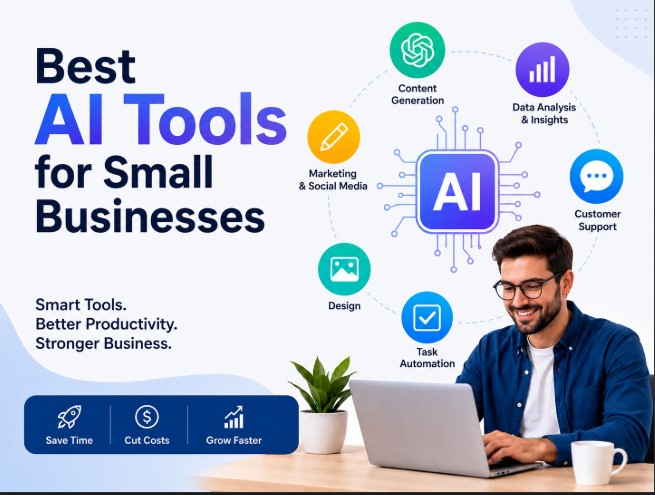
SEO has changed dramatically. Ranking a page today is no longer just about adding a target keyword, writing 1,500 words, and building a few backlinks.
Modern search optimization involves search intent, semantic relevance, topical authority, competitor analysis, technical SEO, content quality, SERP analysis, and ongoing performance monitoring.
That is where AI tools for SEO can make a meaningful difference.
The right tool can reduce hours of manual research into minutes, identify content gaps competitors are exploiting, uncover keyword opportunities, improve existing pages, and help SEO teams make decisions from data rather than assumptions.
But there is an important distinction: AI should accelerate good SEO strategy—not replace it.
Google’s current guidance emphasizes valuable, original content rather than content produced at scale simply to manipulate rankings. Its spam policies specifically classify scaled content abuse as problematic when large quantities of low-value pages are created primarily to influence search rankings.
In this guide, you’ll discover the 10 best AI tools for SEO in 2026, what each tool does best, who should use it, its advantages and limitations, and how to choose the right platform for your SEO strategy.
What Are AI Tools for SEO?
AI SEO tools are software platforms that use artificial intelligence, machine learning, natural-language processing, large datasets, or automated workflows to assist with search engine optimization.
Depending on the platform, they can help with:
- Keyword research
- Keyword clustering
- Search intent analysis
- SERP analysis
- Competitor research
- Content briefs
- SEO content creation
- Content optimization
- On-page SEO
- Technical SEO
- Internal linking
- Backlink analysis
- Rank tracking
- Website audits
- AI search visibility
- SEO reporting and automation
The biggest benefit is not simply generating content faster. The real advantage is turning large amounts of SEO data into actionable decisions.
10 Best AI Tools for SEO in 2026
1. Semrush — Best Overall AI SEO Platform
Best for: Businesses, agencies, marketers, and experienced SEO professionals
Semrush remains one of the most comprehensive SEO platforms because it combines keyword research, competitor analysis, backlink analysis, technical audits, content optimization, rank tracking, and AI-search visibility in one ecosystem.
Its current platform extends beyond traditional Google rankings, allowing users to monitor visibility across Google, AI Overviews, and other AI-driven search experiences. Semrush also provides AI-powered recommendations and content workflows.
Key features
- Keyword research
- Competitor analysis
- Site Audit
- Backlink analysis
- Position tracking
- Content optimization
- AI visibility tracking
- SEO recommendations
- Topic research
- Technical SEO analysis
Pros
- Extremely broad feature set
- Excellent competitive research
- Strong technical SEO capabilities
- Useful for agencies and large websites
- Increasing focus on AI-search visibility
Cons
- Can be expensive for beginners
- Large feature set may feel overwhelming
- Advanced workflows require time to learn
Expert recommendation: Choose Semrush if you want one platform capable of supporting almost your entire SEO workflow.
2. Ahrefs — Best for SEO Data and Keyword Research

Best for: SEO professionals, content marketers, agencies, and link-building teams
Ahrefs has long been recognized for its extensive backlink and keyword databases. Its current AI capabilities extend into keyword research, content creation, technical SEO, reporting, localization, and AI-search visibility.
Its AI tools can help discover keyword opportunities, understand search intent, identify content gaps, improve articles, and automate parts of technical SEO.
Ahrefs also offers free SEO tools for tasks such as keyword research, on-page SEO, link building, and AI visibility checking.
Key features
- Keywords Explorer
- Site Explorer
- Site Audit
- Rank Tracker
- Content research
- AI Content Helper
- Brand monitoring
- AI visibility tracking
- Backlink analysis
Best use case
Suppose you’re creating content around “best running shoes for beginners.”
Ahrefs can help you investigate:
- Keyword demand
- Related search terms
- Ranking competitors
- Backlink profiles
- Content gaps
- Search intent
- Potential subtopics
Expert recommendation: Ahrefs is particularly strong when your SEO strategy depends heavily on keyword research, competitive intelligence, and backlinks.
3. Surfer — Best for Content Optimization
Best for: Content writers, bloggers, publishers, and content teams
Surfer focuses heavily on content optimization.
Its Content Editor analyzes search results and provides recommendations related to topics, headings, content depth, keyword coverage, and other on-page factors.
The platform is designed to help writers create and optimize content based on what currently performs in search.
Key features
- Content Editor
- Content scoring
- Content optimization
- SERP analysis
- Content planning
- AI-assisted writing
- Keyword recommendations
Pros
- Easy-to-understand optimization guidance
- Excellent for content teams
- Useful for updating existing articles
- Strong workflow for on-page optimization
Cons
- Less comprehensive than all-in-one SEO suites
- Content scores should not be treated as ranking guarantees
Expert recommendation: Use Surfer as a guide rather than chasing a perfect score. A useful article must satisfy the reader—not simply match a competitor’s word count or keyword frequency.
4. Frase — Best for AI-Assisted Content Workflows
Best for: Bloggers, content teams, publishers, and businesses focused on content production
Frase combines SEO research, content briefs, optimization, writing assistance, and content analysis.
Its 2026 platform emphasizes the complete content workflow—from research and writing through optimization and publishing.
Key features
- SERP research
- Content briefs
- AI-assisted writing
- Content optimization
- Topic research
- Content scoring
- Competitor analysis
- Content performance workflows
Best use case
Frase is useful when you want to move from:
Keyword → SERP research → Content brief → Draft → Optimization
without switching between multiple platforms.
Expert recommendation: Frase is especially useful for teams publishing large amounts of editorial content while maintaining an organized optimization process.
5. Clearscope — Best for Editorial Content Optimization
Best for: Professional publishers and editorial teams
Clearscope focuses on helping teams create content that comprehensively covers a topic.
Instead of relying solely on exact-match keywords, content optimization platforms like Clearscope help identify relevant terms and concepts that top-performing pages cover.
Key features
- Content grading
- Keyword discovery
- Topic research
- Content optimization
- Editorial workflows
- Content briefs
Pros
- Clean interface
- Strong editorial workflow
- Useful for content quality control
- Good fit for established publishing teams
Cons
- Better suited to professional teams than casual bloggers
- Can be expensive for smaller sites
Expert recommendation: Use Clearscope when editorial consistency and content quality matter more than producing content at maximum volume.
6. SE Ranking — Best All-in-One SEO Value
Best for: Freelancers, agencies, small businesses, and growing SEO teams
SE Ranking combines traditional SEO functionality with AI-assisted workflows.
It covers keyword research, rank tracking, competitor analysis, website auditing, content optimization, and other core SEO tasks. Current comparisons also highlight its AI-assisted content and AI-search tracking capabilities.
Key features
- Rank tracking
- Keyword research
- Competitor analysis
- Website audit
- On-page SEO
- Content optimization
- AI-search tracking
- SEO reporting
Best for: Users who want a broad SEO toolkit without necessarily needing the complexity of an enterprise platform.
7. Screaming Frog SEO Spider — Best for Technical SEO
Best for: Technical SEOs, developers, and large websites
Technical SEO is an area where automation can save enormous amounts of time.
Screaming Frog SEO Spider crawls websites to identify issues involving:
- Broken links
- Redirects
- Duplicate pages
- Metadata
- Canonicals
- Indexability
- Status codes
- Site architecture
- Internal linking
- XML sitemaps
It can also be incorporated into AI-assisted SEO workflows. Semrush’s current 2026 comparison, for example, identifies Screaming Frog as a strong choice for comprehensive technical crawling with AI-assisted functionality.
Expert recommendation
Don’t use AI to blindly “fix” technical SEO problems. First understand why the problem exists, then automate repetitive fixes where appropriate.
8. Keyword Insights — Best for Keyword Clustering
Best for: SEO professionals managing large keyword lists
Keyword clustering is one of the most useful applications of automation in SEO.
Instead of creating one article for every keyword variation, clustering tools group related queries according to their likely search intent and SERP relationships.
For example:
- best CRM software
- best CRM tools
- top CRM platforms
- CRM software comparison
may belong to one broader topic rather than four completely separate articles.
Keyword Insights combines keyword clustering, content briefs, and related SEO workflows. It is particularly useful for large keyword sets and content planning.
Best use case
Use it when you have hundreds or thousands of keywords and need to turn them into a manageable content strategy.
9. Writesonic — Best for Content Creation and AI Search
Best for: Content marketers and businesses that want writing plus search visibility features
Writesonic combines content creation capabilities with SEO-oriented workflows and AI-search tracking.
It can be useful for:
- Blog outlines
- SEO articles
- Content optimization
- Landing-page copy
- Content refreshes
- AI-search visibility
The key advantage is workflow consolidation: teams can move from content ideation to production without relying entirely on separate writing and SEO systems.
Important: Any automatically produced article should still be reviewed, fact-checked, edited, and enriched with original insights before publication.
10. Search Atlas — Best for SEO Automation
Best for: Advanced marketers, agencies, and teams interested in automation
Search Atlas focuses heavily on automating SEO workflows, including technical and on-page optimization.
Automation can be particularly useful for large websites where manually reviewing thousands of pages would be impractical.
Potential use cases
- Technical SEO monitoring
- On-page optimization
- Content workflows
- Site analysis
- Automated recommendations
- Large-scale SEO management
Expert recommendation: Automation works best when you establish clear quality-control rules first. Automating a bad SEO process simply allows you to make mistakes faster.
AI SEO Tools Compared
| Tool | Best For | Keyword Research | Content Optimization | Technical SEO | AI/Automation |
|---|---|---|---|---|---|
| Semrush | All-around SEO | ★★★★★ | ★★★★☆ | ★★★★★ | ★★★★★ |
| Ahrefs | Data & backlinks | ★★★★★ | ★★★★☆ | ★★★★★ | ★★★★☆ |
| Surfer | Content optimization | ★★★★☆ | ★★★★★ | ★★☆☆☆ | ★★★★☆ |
| Frase | Content workflows | ★★★★☆ | ★★★★★ | ★★☆☆☆ | ★★★★★ |
| Clearscope | Editorial SEO | ★★★☆☆ | ★★★★★ | ★★☆☆☆ | ★★★☆☆ |
| SE Ranking | Value & all-in-one SEO | ★★★★☆ | ★★★★☆ | ★★★★☆ | ★★★★☆ |
| Screaming Frog | Technical SEO | ★★☆☆☆ | ★★☆☆☆ | ★★★★★ | ★★★☆☆ |
| Keyword Insights | Keyword clustering | ★★★★★ | ★★★★☆ | ★☆☆☆☆ | ★★★★☆ |
| Writesonic | Content creation | ★★★☆☆ | ★★★★☆ | ★★☆☆☆ | ★★★★★ |
| Search Atlas | SEO automation | ★★★★☆ | ★★★★☆ | ★★★★★ | ★★★★★ |
Features and plans change frequently, so verify current capabilities and pricing on each vendor’s official website before purchasing.
How to Choose the Best AI Tools for SEO
There isn’t one perfect SEO tool for everyone.
Start by identifying your biggest bottleneck.
If your biggest problem is keyword research
Choose Ahrefs, Semrush, or Keyword Insights.
If your biggest problem is content optimization
Consider Surfer, Frase, or Clearscope.
If technical SEO is your priority
Start with Screaming Frog, Semrush, Ahrefs, or SE Ranking.
If you manage an agency
An all-in-one platform such as Semrush or SE Ranking can reduce the number of disconnected workflows.
If you’re a blogger
You may not need an expensive enterprise platform. Combine a free SEO toolkit with a focused content optimization solution and Google Search Console.
Ahrefs and Semrush both provide free SEO resources that can be useful when you’re starting out.
How to Use AI Tools for SEO Effectively
The best results come from combining automation with human judgment.
Use this five-step process.
Step 1: Start With Search Intent
Before researching keywords, understand what the searcher actually wants.
For example, someone searching:
“best accounting software”
probably wants comparisons and recommendations.
Someone searching:
“how to reconcile accounts”
probably wants a practical tutorial.
The content format should match the intent.
Step 2: Build a Keyword and Topic Map
Use keyword research tools to identify:
- Primary keywords
- Supporting keywords
- Long-tail queries
- Related questions
- Commercial terms
- Informational queries
- Topic clusters
Don’t create separate pages for every minor keyword variation if the same page can satisfy the underlying intent.
Step 3: Analyze the SERP
Study the pages already ranking.
Look for:
- Content formats
- Heading structures
- Common questions
- Missing information
- Supporting statistics
- Images and videos
- Internal linking patterns
- Commercial intent
- Content depth
Then identify what the current results don’t answer well.
That gap can become your competitive advantage.
Step 4: Create Better Content
Use SEO tools to speed up research and optimization, but add something competitors don’t have.
For example:
- Original examples
- First-hand experience
- Expert commentary
- Original data
- Case studies
- Screenshots
- Calculations
- Practical templates
- Unique comparisons
This is how you move from optimized content to genuinely useful content.
Step 5: Measure and Improve
SEO is not finished when an article is published.
Monitor:
- Organic traffic
- Rankings
- Click-through rate
- Conversions
- Engagement
- Impressions
- New keywords
- Declining pages
- Backlinks
- Search visibility
Then update content based on actual performance.
Best Practices for AI-Powered SEO
1. Use tools for research, not shortcuts
Automation is excellent for collecting and organizing information. Your strategy should still determine what gets published.
2. Optimize for people first
A page can have excellent keyword coverage and still fail because it doesn’t answer the reader’s question clearly.
3. Add original value
Google’s current spam guidance makes an important distinction: the problem isn’t simply the use of generative technology. The issue is creating large quantities of unoriginal, low-value content primarily to manipulate rankings.
4. Refresh old content
Existing pages often provide a faster SEO opportunity than creating dozens of new ones.
Review outdated:
- Statistics
- Screenshots
- Product information
- Examples
- Links
- Titles
- Meta descriptions
- Search-intent alignment
5. Don’t chase an optimization score
A content score is a diagnostic signal—not a ranking guarantee.
A page with a lower score can outperform a higher-scoring page if it offers better information and satisfies search intent more effectively.
Common Mistakes to Avoid
Mistake 1: Publishing hundreds of automated pages
More pages do not automatically mean more traffic.
Mistake 2: Keyword stuffing
Modern SEO requires semantic relevance, not repetitive keyword insertion.
Mistake 3: Treating AI output as fact
Always verify statistics, claims, product specifications, dates, and industry information.
Mistake 4: Ignoring technical SEO
Great content cannot compensate for serious crawling, indexing, performance, or architecture problems.
Mistake 5: Copying competitors
SERP analysis should reveal opportunities—not encourage you to rewrite what’s already ranking.
Mistake 6: Optimizing only for Google
Search behavior is expanding across traditional search, AI-powered interfaces, communities, video platforms, and other discovery channels. Google itself now provides guidance around visibility in generative AI features while emphasizing that established SEO fundamentals remain relevant.
Expert Tips for Getting Better Results
Tip 1: Combine tools instead of forcing one platform to do everything.
A technical SEO crawler, keyword database, and content optimization platform may produce better results together than one tool used for every task.
Tip 2: Build topic clusters before publishing at scale.
Think in terms of a central topic supported by related articles rather than isolated keyword pages.
Tip 3: Use competitor analysis to find gaps.
Don’t ask only, “What keywords do they rank for?”
Ask:
“What valuable questions are their pages failing to answer?”
Tip 4: Prioritize pages that can produce business results.
Traffic alone isn’t the goal. Look for keywords connected to:
- Leads
- Sales
- Sign-ups
- Product discovery
- Commercial research
- Brand awareness
Tip 5: Use first-hand experience as a differentiator.
Screenshots, real examples, testing notes, original observations, and case studies can make content significantly more useful than generic summaries.
People Also Ask: Frequently Asked Questions
What are the best AI tools for SEO in 2026?
The best choice depends on your objective. Semrush and Ahrefs are strong all-around platforms, Surfer and Frase are excellent for content optimization, Screaming Frog is strong for technical SEO, and Keyword Insights is useful for large-scale keyword clustering.
Can AI tools improve Google rankings?
They can improve the SEO workflow by helping with research, content optimization, technical audits, and competitive analysis. However, no tool can guarantee rankings. Search performance still depends on relevance, quality, competition, authority, technical accessibility, and many other factors.
Will Google penalize AI-generated content?
Google’s policies focus on the quality and purpose of content rather than simply whether a particular technology was used. However, Google explicitly identifies scaled content abuse—including large amounts of low-value content generated using automated systems—as a spam issue.
Are free AI SEO tools worth using?
Yes. Free tools can be very useful for keyword research, website checks, content ideas, and basic optimization. Ahrefs and Semrush both provide free SEO resources.
For a new website, starting with free resources and upgrading only when you hit a data or workflow limitation is often the most sensible approach.
What is the difference between AI SEO tools and traditional SEO tools?
Traditional SEO tools primarily provide data, reports, crawls, rankings, and research. AI-powered SEO tools add capabilities such as natural-language analysis, automated recommendations, content assistance, keyword clustering, workflow automation, and AI-search visibility analysis.
The distinction is becoming less clear because major SEO platforms increasingly combine both approaches.
Can AI tools replace an SEO specialist?
Not reliably.
Tools can automate repetitive work and surface opportunities, but SEO still requires strategic judgment.
An experienced SEO professional must understand:
- Business objectives
- Search intent
- Audience needs
- Competitive positioning
- Content quality
- Technical architecture
- Brand requirements
- Conversion behavior
Automation can reduce manual work, but strategy remains essential.
How many SEO tools do I actually need?
Most small websites don’t need ten tools.
A practical setup could include:
- One comprehensive SEO platform
- Google Search Console
- Google Analytics
- One content optimization tool if necessary
- A technical crawler for advanced audits
Add additional tools only when they solve a specific problem.
Internal Linking Opportunities
If you’re building a larger SEO resource hub, this article can naturally link to related pages such as:
- Complete Keyword Research Guide
- How to Do a Technical SEO Audit
- On-Page SEO Checklist
- How to Build Topic Clusters
- Best Free SEO Tools
- How to Write SEO-Friendly Content
- SEO Competitor Analysis Guide
- How to Improve Organic Traffic
- SEO Content Brief Template
- Internal Linking Best Practices
These supporting pages can strengthen topical authority and create a logical content cluster around SEO.
Authoritative External References
For readers who want to verify SEO best practices, useful primary references include Google Search Central’s documentation and spam policies, along with official documentation from major SEO platforms such as Ahrefs and Semrush. Google’s current documentation also provides updated guidance on search visibility in generative AI features.